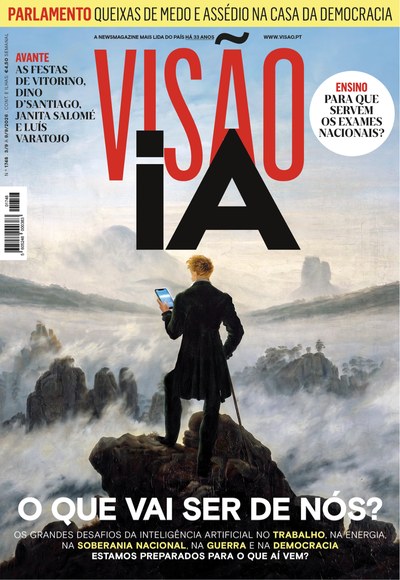
What Will Become of Us?
In 1914, Henry Ford realised that a factory could not treat the person who made it work as a cost alone. For a century, wages, consumption and the state formed a circuit. Artificial intelligence could break it, and we have barely begun to prepare for what comes next.
“The machine replaces the worker at the workstation, but not in the circuit.”
In January 1914, Henry Ford did something his Detroit peers thought absurd. He more than doubled assembly-line workers’ pay to five dollars a day and shortened their shift to eight hours. The press called it madness and an attack on profits. Ford was not simply being generous. He was solving an industrial problem and grasping a larger economic truth: a factory could not treat the person who made it work as a cost alone.
That was the pact that sustained much of twentieth-century capitalism. Wages were no longer merely an expense to be squeezed; they also meant demand, tax revenue and social stability. For decades, the same person produced, bought and paid. That triple role, embodied in a single person, closed the circuit.
So the question is not whether there will be more wealth. There will. It is how that wealth will reach those who no longer receive it through work.
Original bibliographic details (Portuguese)
Publicado originalmente na Visão, edição n.º 1748, de 3 a 9 de setembro de 2026, no dossier de capa «O que vai ser de nós?», sobre os grandes desafios da inteligência artificial. O ensaio abre o capítulo dedicado ao trabalho. Online, na Visão, o texto integral é reservado a assinantes. Esta página reúne os elementos bibliográficos e um excerto do texto.
Miguel Sousa Soares is an economist and analyst of geoeconomics and artificial intelligence, with more than twenty years’ experience in strategy and corporate finance. He writes for Visão, Jornal de Notícias, Expresso and Correio da Manhã. He comments on artificial intelligence on NOW on Fridays.